The employee who transferred $47,000 to a fraudulent account last spring thought she was following her manager's instructions. The email had his name, referenced an active project, and matched his writing style exactly. Her manager never sent that email. An AI tool wrote it in seconds by pulling details from the company website and LinkedIn page.
This is not a hypothetical scenario invented to alarm you. It is the new reality for small businesses across Michigan and across the country, and it is accelerating faster than most IT providers are telling their clients.
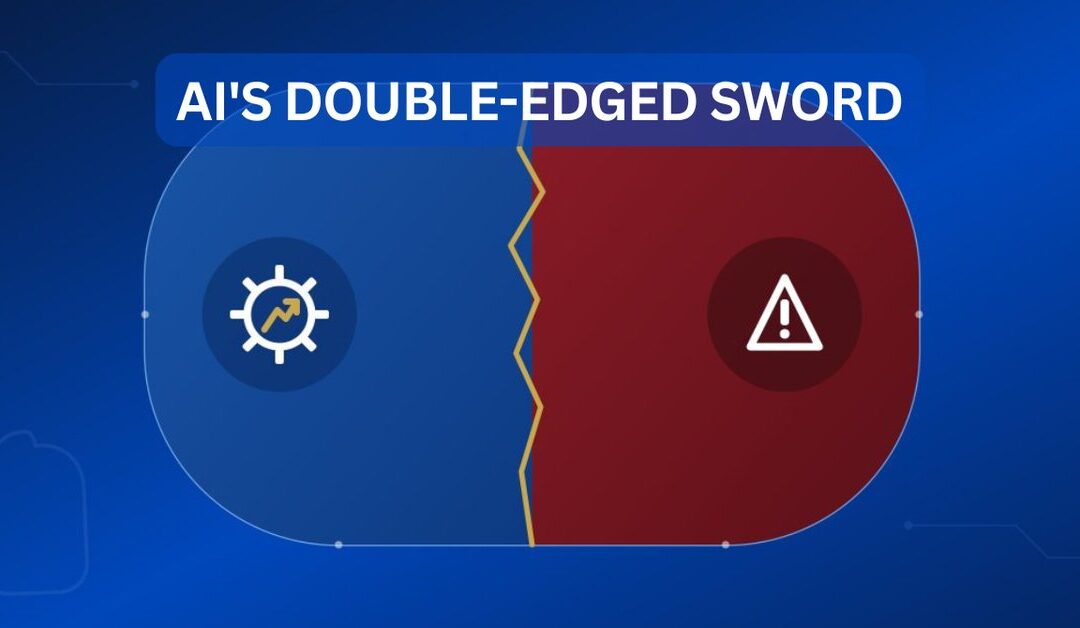
The AI tools your employees use to work faster are the same technology criminals are using to attack smarter. Understanding these AI cybersecurity risks is now one of the most important things a Michigan small business owner can do.
WHAT IS AN AI-DRIVEN CYBER THREAT?
An AI-driven cyber threat is an attack in which criminals use artificial intelligence software to automate, personalize, and accelerate attacks against businesses. Instead of manually crafting phishing emails or probing for network vulnerabilities one by one, attackers now use AI to do this work at machine speed, targeting small businesses at a scale that was not economically possible two years ago.
Why Small Businesses in Michigan Are the Primary Target Now
AI has changed the economics of cybercrime. Attacking a small business used to require roughly the same effort as attacking a large corporation, but the payoff was much smaller. AI changes that equation entirely. Attackers can now launch hundreds of personalized attacks in the time it once took to launch one, and small businesses with lighter security defenses are the easiest mark.
Research published by Vistage and multiple cybersecurity firms found that small and mid-sized businesses accounted for 70.5 percent of all data breaches in 2025. A separate analysis found that 88 percent of ransomware attacks hit small businesses that same year. Michigan's economy amplifies this exposure: the state's concentration of legal, medical, financial services, and manufacturing businesses gives attackers multiple high-value industries to pursue at the same time.
In our experience working with small businesses across Macomb, Oakland, and Wayne Counties, the most common reaction when a client first hears these numbers is disbelief. Their business does not feel like a target. That is exactly what attackers count on.
The Three AI-Powered Threats Michigan Business Owners Face Right Now
1. AI-Generated Phishing Emails That Look Like They Know You
Traditional phishing emails were easy to spot. They were generic, poorly written, and blasted to anyone with an inbox. AI-generated phishing emails are different. They pull your name, your company, your clients, and your industry from publicly available information and construct a message that reads as if it came from someone you trust. The 2026 Vistage CEO Cybersecurity Report found that AI-generated phishing campaigns are now arriving at a level of personalization that was technically impossible just two years ago.
One of our clients, a construction company in Southeast Michigan, received a message that appeared to come from their general contractor requesting an update to payment information ahead of a large disbursement. The company name, contractor name, and project details were all accurate. The email account had been spoofed, and an AI tool had assembled that information from public sources in minutes. Because the team had gone through security awareness training with Cyber Protect, an employee paused before clicking. The business did not lose a dollar.
2. Deepfake Requests for Wire Transfers and Access
The voice on the call sounded exactly like the managing partner. The request was unusual, but he had called in urgent situations before. The office manager authorized the transfer. The managing partner was in a meeting and had never placed that call. Deepfake audio, where AI generates a convincing voice clone from as little as three seconds of sample audio, is now being used to authorize fraudulent wire transfers, approve access changes, and instruct employees to bypass security protocols.
For Michigan law firms and accounting practices, where wire transfers and client fund movement are routine, this threat is particularly acute. Any request involving money, access credentials, or an unusual instruction that arrives by phone or email should be confirmed through a second, independent channel before action is taken.
3. AI That Exploits the Tools You Are Already Using
When your team uses AI productivity tools such as Microsoft Copilot, ChatGPT, or similar platforms in their daily work, those tools create new pathways for attackers. Security researchers are now tracking an attack category called prompt injection, in which hidden instructions are embedded inside a document, email, or webpage that an AI assistant reads. The assistant then follows those hidden instructions, potentially sending sensitive information or opening access to internal systems without the employee realizing anything happened.
This is not a future risk. It is being actively tracked in 2026, and most small businesses have no policies or safeguards in place for it. If your team is using AI productivity tools and your IT provider has not discussed this with you, that conversation is overdue.
Not Sure If Your Business Is Protected?
Cyber Protect offers a free Cybersecurity and IT Services Audit for Michigan small businesses. We review your current setup and identify gaps before attackers find them.
What Your IT Provider Should Already Be Doing About This
The right response to AI-driven threats is not to stop using AI tools or to shut down your email. It is to make sure that foundational security protections are in place and that your IT provider understands the current threat landscape well enough to address it specifically.
Cyber Protect LLC works with small businesses across Southeast Michigan to evaluate and close exactly these gaps. Our co-founder Chey Harden brings over 25 years of IT and cybersecurity experience, including product development work with McAfee EPO engineering and VMware Carbon Black. We have watched the threat landscape shift dramatically over the past two years, and we update how we protect our clients to stay ahead of it.
The protections that matter most in 2026:
- Multi-factor authentication (MFA) on every cloud account and remote access point. This is the single highest-impact step any business can take, and it stops the majority of credential-based attacks cold.
- Advanced email security filtering that detects AI-generated phishing patterns, not just known-bad senders from last year's threat lists.
- Security awareness training updated specifically for AI threats, including current examples of AI-generated phishing, deepfake audio, and business email compromise.
- Endpoint protection on every device that touches company data, including personal phones used for work email or files.
- A clear verification process for any financial request, access change, or unusual instruction that arrives by phone or email. A single callback to a known number stops deepfake attacks.
- A properly configured Microsoft 365 security setup, reviewed and hardened for the AI threat environment of 2026.
If your current IT provider has not discussed AI-specific threats with you in the last six months, that is a gap worth closing before an attacker closes it for you.
Frequently Asked Questions
What is an AI-driven cyber threat?
An AI-driven cyber threat is an attack in which criminals use artificial intelligence to automate, personalize, or scale malicious activity against businesses. Examples include AI-generated phishing emails that convincingly mimic real colleagues, deepfake audio used to authorize fraudulent wire transfers, and AI tools that probe networks for vulnerabilities faster than any human attacker could. These attack types are not new in concept, but AI has made them dramatically cheaper and more scalable for criminals to execute at volume.
Are Michigan small businesses really targets for AI-powered attacks?
Yes. Small and mid-sized businesses accounted for more than 70 percent of data breaches in 2025, partly because they are seen as easier targets than large corporations with dedicated security teams. Michigan's concentration of law firms, medical practices, construction companies, and financial services businesses makes the state a consistent target. Attackers are not looking for a challenge. They are looking for the path of least resistance to a payout.
How do I know if my employees could fall for an AI-generated phishing email?
Most employees cannot reliably distinguish a well-crafted AI phishing email from a legitimate one. The only reliable protection is a combination of technical email security filtering and regular security awareness training that covers current AI-generated attack examples. Annual training written three years ago does not reflect what employees are seeing in their inboxes today. Cyber Protect offers phishing simulation testing that lets you measure your team's real vulnerability before an attacker does.
What AI security risks come from using tools like Microsoft Copilot?
AI productivity tools including Microsoft Copilot, which is built into Microsoft 365, can be exploited through a technique called prompt injection, where hidden instructions embedded in documents or emails redirect what the AI does with your data. Properly configured Microsoft 365 security settings and access controls significantly reduce this risk. If your team uses AI tools and your IT provider has not recently reviewed your Microsoft 365 security configuration, schedule that review now.
Who helps Michigan small businesses with AI cybersecurity risks?
Cyber Protect LLC is a cybersecurity-first IT firm serving small businesses across Southeast Michigan, including Macomb, Oakland, and Wayne Counties. We help owners in regulated industries including law, healthcare, accounting, and construction assess and address AI-driven threats through our free Cybersecurity and IT Services Audit. Schedule yours at cyberprotectllc.com.
Schedule Your Free Cybersecurity and IT Services Audit
Cyber Protect reviews your full security posture at no cost to you. Here is what we assess:
About the Author

Cheyenne Harden
CEO